European Commission backs Climate Impulse hydrogen round-the-world flight By Ben Sampson The European Commission has granted its official patronage to Climate Impulse, the project aiming to make the first non-stop, zero-emission flight around the world powered entirely by green hydrogen. Led by explorer Bertrand Piccard and composite-materials engineer Raphaël Dinelli, Climate Impulse is developing a liquid-hydrogen, fuel-cell-electric aircraft, now under construction in...Read More
Aerospace industry launches hiring campaign amid skills shortages By Adam McCulloch The aerospace industry has launched a nationwide recruitment campaign after new figures revealed that two-thirds of employers are struggling with skills shortages that are holding back growth. Trade body ADS has joined forces with Airbus, GKN Aerospace, Lockheed Martin, Rolls-Royce and Safran to launch the There’s Aerospace For You campaign in...Read More
Lockheed Martin Skunk Works tests sensor-driven autonomy on a fighter aircraft By Teodor Stefan An artificial intelligence (AI) agent used targeting information from an operational sensor to execute successful air intercepts against a live target. Across 8 flights, the X-62 Variable In-flight Simulation Test Aircraft executed 27 AI-controlled intercepts. The objective was to demonstrate that the X-62 and its integrated autonomy...Read More
Kenya Reviews Bill to Establish Independent Transportation Safety Board Kenya’s Budget and Appropriations Committee has considered a legislative proposal to establish an independent body responsible for investigating transport accidents and incidents across the country’s road, rail, aviation and maritime sectors. The Committee reviewed the proposed Kenya Transportation Safety Board Bill, 2026, on 6 August as part of its scrutiny of...Read More
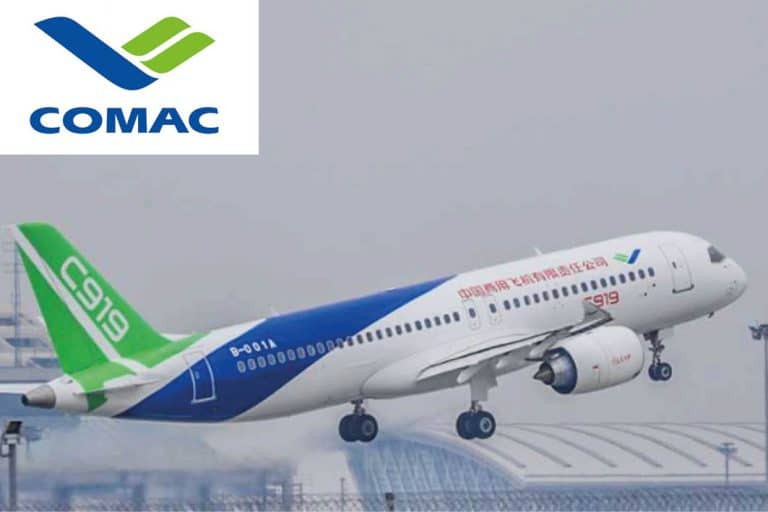
COMAC crosses global milestone By Swati. K China’s homegrown narrowbody has crossed its first international border, but matching Boeing and Airbus will depend as much on maintenance, certification and supply chains as aircraft production. When Air China Flight CA723 landed in Ulaanbaatar, Mongolia, on August 12 after departing Beijing aboard a COMAC C919, the two-hour journey became one of the...Read More
PODCAST: Glenn Piper of WireMasters on Connecting the Future: The Critical Role of Wiring in Advanced Air Mobility By Jason Pritchard Our latest podcast episode is now live! This week, we were joined by Glenn Piper, Director of Global Product Manager at WireMasters. eVTOL Insights host Jason Pritchard and Glenn explore the increasingly critical role of wiring and electrical architecture...Read More
Explaining DO-178C: The safety standard for software in aviation By Andrew Longhurst DO-178C, officially titled Software Considerations in Airborne Systems and Equipment Certification, serves as the foundational standard for aerospace safety. It is the primary standard used by certification authorities like the Federal Aviation Administration (FAA), which regulates civil aviation in the United States, and European Union Aviation Safety Agency...Read More
BBC The engineers: Flying at the edge Aviation is being reimagined for a changing planet: Vertical take-off passenger cars for city centres. Hydrogen powered planes for zero carbon travel. Hyper-sonic flights to take the London to Sydney journey to under two hours. Leading aircraft engineers Kelly Latimer, US Aerospace engineer, flight test pilot, and former Flight Test Director of Virgin...Read More
Heart Aerospace cleared for X1 flight tests FAA issues experimental airworthiness certificate for hybrid-electric aircraft demonstrator By Jonathan. S Heart Aerospace has received a Special Airworthiness Certificate in the Experimental Category (SAC-EC) from the US Federal Aviation Administration (FAA), clearing the company to begin flight testing of its X1 demonstrator aircraft. The approval marks a significant milestone in the development...Read More
FAA Certifies Boeing 737-7, Clearing Smallest MAX Variant for Delivery By Helwing Villamizar The U.S. Federal Aviation Administration (FAA) has certified the Boeing 737-7, clearing the smallest member of the 737 MAX family to move toward customer deliveries after a flight-test and analysis program that began in 2018. The regulator granted Boeing an amended type certificate for the 737-7 design, Boeing...Read More
 Promoting AirworthinessInternationalImpartial