Swansea research contributes to world-first hydrogen aero engine breakthrough
By UK Aviation News
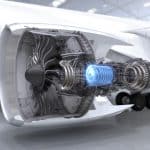
Researchers from Swansea University have played a key role in a landmark aviation achievement after a modern aero engine was successfully operated on 100% hydrogen fuel at full take-off power for the first time.
The milestone marks the culmination of a four-year international programme led by Rolls-Royce and easyJet, aimed at demonstrating the viability of hydrogen as a future aviation fuel and advancing efforts to decarbonise air transport.
The successful test is being hailed as a major step forward for zero-carbon aviation, proving that hydrogen has the potential to power future generations of aircraft without producing carbon dioxide emissions during flight.
Swansea University’s contribution centred on advanced combustion research, with experts supporting the development and understanding of hydrogen combustion characteristics within gas turbine engines. The university’s work helped address some of the key technical challenges associated with using hydrogen as an aviation fuel, including flame stability, efficiency and emissions performance.
The programme brought together a range of industrial and academic partners, combining expertise in propulsion technology, fuel systems, safety and combustion science. The successful demonstration saw a modern aero engine achieve full take-off thrust using hydrogen fuel, an achievement widely regarded as a world first within commercial aviation propulsion development.
Researchers involved in the project said the achievement demonstrates significant progress towards alternative propulsion technologies that can support the aviation industry’s net-zero ambitions.
Hydrogen is increasingly being viewed as one of several potential pathways towards reducing aviation’s environmental impact, alongside sustainable aviation fuel (SAF), improved aircraft efficiency and emerging electric propulsion technologies. While significant challenges remain around aircraft design, fuel storage and airport infrastructure, successful engine demonstrations are seen as critical steps towards commercial deployment.
The breakthrough further strengthens the United Kingdom’s position at the forefront of hydrogen aviation research and development, with industry and academic partners continuing to explore how the technology could be scaled for future commercial operations.
For Swansea University, the achievement highlights the growing role of academic research in helping shape the next generation of sustainable aviation technologies and supporting the industry’s transition towards lower-carbon flight.