FAA Orders Airbus A380 Engine Replacements After Uncontained Failure Forces Aborted Take-off
By Aaron Bailey
The Federal Aviation Administration has ordered that turbine components on certain Airbus A380 engines be replaced after an uncontained failure resulted in the superjumbo aborting a takeoff. This directive was issued on October 8 and targets the 15 high-pressure turbine interstage seals that are on the Engine Alliance GP7200-series engines.
The airworthiness directive is in effect from October 23, with the highest urgency replacements required within 50 flight cycles or 30 days. It is estimated that the cost to replace is $528,150 per affected engine, as reported by AeroTime.
Uncontained Failure Of An Interstage Seal
A manufacturer’s investigation into the incident identifies that cracking could have occurred at the locating features between the interstage seal and shaft, from the first-stage turbine disk. Investigators identified that the relative rotation of the seal, which is known as ‘clocking’, was found to be a contributing factor.
Greater Movement In Seals From Engines Reassembled In Overhaul
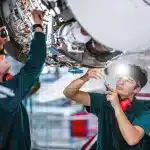
While the root cause remains under investigation, the manufacturer has found that movement in seals has been possible in engines that have been reassembled during overhaul. Overhaul is when airline aircraft engines are scheduled for maintenance, with the engine being uninstalled, disassembled, then cleaned, inspected, and repaired. It is then reassembled and tested to strict manufacturer and airworthiness standards.
| Engine Alliance Types | Thrust | Application |
|---|---|---|
| GP7270 | 70,000 lbf | Standard passenger variants |
| GP7272 | 72,000 lbf | Higher output in warmer ambient conditions |
| GP7277 | 76,500 lbf to 80,290 lbf | Intended for heavy-duty configurations |
All three of these have key technical similarities and belong to the GP7000 turbofan family, which is a joint venture between GE Aerospace and Pratt & Whitney. They share the same architecture, with GE90-derived core and PW4000 low-pressure models, with a 116-inch (294.6 cm) swept titanium fan and electronic engine control.
Next Steps For Operators
Operators must now replace the affected seals with eligible parts under the Engine Alliance service bulletin, and the FAA has adopted the rule without public consultation. This is due to the imminent safety risk and short compliance deadline. The directive is an interim measure and has stated that further rulemaking could follow once the root cause is identified.
The cost to replace these parts is estimated at up to $528,150 per affected engine, or $527,300 including parts. No engines are installed on US-registered aircraft (as no airline in the US operates the A380). The FAA has not specified the total number of aircraft that are affected by this directive.
Airbus produced the A380 until 2021, and it is the largest passenger aircraft and the only full-length double-deck jet aircraft in the world. The aircraft’s launch operator was  Singapore Airlines, which debuted the aircraft between Singapore Changi Airport (SIN) and
 Sydney Kingsford Smith Airport (SYD) on October 25, 2007.