


- This event has passed.
John Saull Memorial Lecture 2025
“Improvements in Safety from Aircraft Accident Investigations over the last 40 years” with Philip Sleight
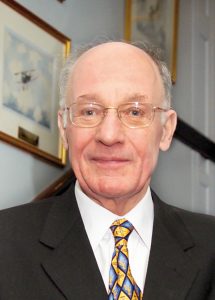
The third John Saull Memorial Lecture will take place on Wednesday 19th November 2025 in the Sir Peter Gregson Aerospace Integration Research Centre (AIRC) Cranfield University, Bedford, UK.
The event will also be recorded. The memorial lecture is presented by Cranfield University in recognition of John’s long term role as Chair of the Cranfield College of Aeronautics Alumni Association (CCAAA).
We are pleased to announce that our special guest lecture this year will be given by Philip Sleight, Deputy Chief Inspector of Air Accidents, AAIB who will be presenting “Improvements in safety from aircraft accident investigations over the last 40 years”
This event will also include inspiring discussion and activities, focussing on the future of Engineers in our Industry, Tours of Cranfield University’s Award Winning Facilities and the presentation of the John Saull Scholarship & IFA Whittle Safety Awards.
Please register your free place to attend/support this event. Refreshments will be served during the afternoon.
Agenda
09:15 Registration
10:00 Welcome from IFA CEO & President
10:15 Lecture plus Q&A from Phil Sleight, Deputy Chief Inspector of Air Accidents, AAIB
11:30 Group/Table Exercise
12:15 Lunch & Networking
13:15 Presenting findings from Group/Table Exercise
13:45 IFA/Cranfield/John Saull Award Presentation
14:00 IFA Whittle Safety Award Presentation
14:15 Close/Optional Cranfield University Tours
Philip Sleight, Deputy Chief Inspector of Air Accidents, AAIB
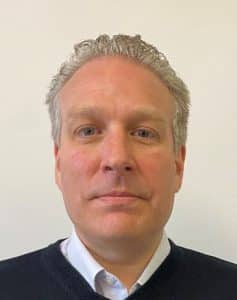
Philip Sleight is the Deputy Chief Inspector of Air Accidents with the Air Accidents Investigation Branch. He joined the AAIB in 2002 as an Inspector of Air Accidents (Engineering) and has been involved in several hundred investigations around the world, notably the accident to the MK Airlines B747 in Halifax in 2004, Boeing 777 at London Heathrow in 2008, Nimrod XV230 in Afghanistan in 2006 and the ditching of the EC225 helicopters in the North Sea in 2012.
Prior to joining the AAIB, Philip was an Aircraft Systems Design Engineer with British Airways Engineering, having initially started his career there as an apprentice avionic maintenance engineer in 1988.
Philip holds a first-class honours degree from the Open University and is a Chartered Engineer. He is a Fellow of the Royal Aeronautical Society. He is also a Chartered Manager and a member of the Chartered Management Institute.
Life and work of John Saull
John Saull was born in Hale, Cheshire in 1935, and educated at Altrincham Grammar school. He took an early interest in civil aviation, working for a small aerial photography and charter company at Ringway (Manchester) airport, where he spent his leisure hours working on the aeroplanes and flying in them whenever to opportunity arose.
After leaving school, he took an Aeronautical Engineering Apprenticeship at A.V.Roe, Manchester, which he completed in 1958. During this period he worked on Vulcan bomber production including some flight testing, and space projects. He subsequently became the first technical representative on the AVRO 748 commuter aircraft and went to Argentina in 1961 on board the first aircraft for the national airline, based in Buenos Aires.
By 1963, John had been invited to join the Air Registration Board (ARB), the UK airworthiness regulator. Cranfield College of Aeronautics was John’s next venue where he obtained an Air Transport Engineering degree and took the “unmissable” opportunity to obtain his Private Pilots Licence flying Auster aircraft, one of which he has co-owned for some 30 years.
In 1966, John moved to Bristol and took the responsibility for the oversight of the construction standards of the supersonic airliner, Concorde. John found the work on Concorde fascinating, it took him to all the UK manufacturing plants and to the French assembly line in Toulouse, on regular liaison visits. He was involved with the development of the aircraft from initial build of the prototypes through to airline route proving and made several flights during this time.
His next assignment was in Trinidad, West Indies, where he took up the management of a team of UK Civil Aviation Authority (CAA) airworthiness advisors to the Directors of Civil Aviation in many of the Caribbean islands, effectively from Guyana to Belize, which followed UK regulation standards.

John held several senior positions with the CAA, finally retiring as head of operating standards in late November 1995, after 32 years as a safety regulator.
He served as a member of the Council of the Royal Aeronautical Society and was a Liveryman of the Guild of Air Pilots and Air Navigators. He continued his flying and aviation technical safety work as Executive Director of The International Federation of Airworthiness for 20 years. John also co-authored two published technical books on the safety record of technological industries.


