COMAC crosses global milestone
By Swati. K
China’s homegrown narrowbody has crossed its first international border, but matching Boeing and Airbus will depend as much on maintenance, certification and supply chains as aircraft production.
When Air China Flight CA723 landed in Ulaanbaatar, Mongolia, on August 12 after departing Beijing aboard a COMAC C919, the two-hour journey became one of the most significant flights in recent aviation history. It was the first time China’s domestically developed narrowbody had operated a scheduled commercial passenger service beyond Chinese territory, marking a symbolic step in Beijing’s decades-long ambition to build a viable alternative to the Boeing-Airbus duopoly.
For China’s aviation industry, the milestone represents proof that the C919 is gradually moving from a domestic programme into regular international operations. For the rest of the aerospace industry, however, the flight raises a much bigger question: Can COMAC become a genuine global competitor or is the toughest part of the journey only just beginning?
The answer lies not only in aircraft manufacturing, but in the less visible pillars of aviation success: certification, production capacity, aftermarket support and global maintenance networks.
A milestone beyond the route map
On paper, the Beijing-Ulaanbaatar route appears modest.
The aircraft departed Beijing Capital International Airport at around 3 p.m. local time and reached Mongolia’s capital roughly two hours later. The service will now operate daily, replacing the Boeing 737 MAX previously deployed on the route. Yet its significance extends far beyond Mongolia.
Since entering commercial service with China Eastern Airlines in May 2023, the C919 has steadily expanded across China’s domestic network. According to COMAC, the aircraft has now operated on dozens of routes, connected more than two dozen cities and carried millions of passengers, providing valuable operational experience before venturing into scheduled international service. For Beijing, the international launch serves another purpose.
It demonstrates that China can now operate a domestically developed large passenger aircraft in regular cross-border commercial service, something only a handful of countries have successfully achieved.
China’s long road to a homegrown airliner
The C919 did not appear overnight. COMAC launched the programme in 2008 as part of China’s broader industrial strategy to reduce dependence on foreign aerospace manufacturers. The aircraft made its maiden flight in 2017, received certification from China’s aviation regulator in 2022, and entered commercial passenger service the following year. Unlike many aviation programmes built primarily around private industry, China’s approach relied heavily on long-term government investment, coordinated industrial planning and a guaranteed domestic customer base.
State-owned airlines including Air China, China Eastern Airlines and China Southern Airlines became early operators, allowing COMAC to build operational experience while refining the aircraft in commercial service. In many ways, China has attempted to create not just an aircraft, but an aerospace ecosystem.
That strategy has produced visible progress. The C919 now stands as China’s first domestically developed large passenger jet capable of competing in the same single-aisle market served by the Airbus A320neo and Boeing 737 MAX families.
The numbers tell a different story
Despite the symbolism, COMAC remains far behind its Western competitors. Industry analysts estimate that the manufacturer delivered around 32 C919 aircraft by the end of 2025, with only a handful added during 2026. By comparison, Airbus delivered roughly 100 narrowbody aircraft to China alone during 2025.
The production gap illustrates perhaps COMAC’s greatest challenge. Building prototypes is difficult. Building hundreds of aircraft every year while maintaining quality, supplier coordination and delivery schedules is something entirely different.
COMAC has publicly targeted much higher production rates before the end of the decade, but analysts believe reaching those goals will require significant expansion across its manufacturing and supplier base.
The supply chain reality
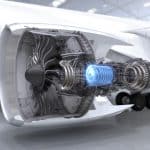
One of the biggest misconceptions surrounding the C919 is that it is entirely Chinese. It is not. Many of the aircraft’s most critical systems continue to come from international suppliers. Its engines are supplied by CFM International, the joint venture between GE Aerospace and Safran Aircraft Engines, while several other key components also rely on foreign technology. That dependence creates both technical and geopolitical challenges. Any disruption within the global aerospace supply chain or changes in export policies can directly affect production, deliveries, and future development. As aerospace analysts frequently point out, aircraft manufacturing depends on thousands of specialised parts arriving precisely when needed.
Missing even a relatively small component can delay an entire aircraft delivery. That reality applies equally to COMAC.
Certification- The passport COMAC still needs
Crossing into Mongolia represents international service. It does not represent global certification. The C919 still lacks certification from major Western regulators, including the U.S. Federal Aviation Administration (FAA) and the European Union Aviation Safety Agency (EASA). Without those approvals, the aircraft faces major limitations in selling to airlines across Europe, North America, and many other international markets. Certification is about far more than paperwork. It determines whether airlines, leasing companies, insurers and financiers view an aircraft as a globally deployable asset. For COMAC, winning those approvals could become one of the programme’s defining milestones.
The aftermarket question
Perhaps the biggest lesson from Boeing and Airbus is that building an aircraft is only half the business. Keeping it flying is the other half.
Every commercial aircraft depends on an extensive aftermarket ecosystem that includes line, heavy maintenance, spare parts distribution, technical publications, engineering support, training, etc. This is where Boeing and Airbus enjoy decades of accumulated advantage.
Their aircraft operate within mature global support networks that allow airlines to source parts, conduct repairs and maintain dispatch reliability almost anywhere in the world.
COMAC must now build that same confidence. As its fleet gradually expands beyond China, airlines will expect reliable component availability, certified maintenance providers, trained technicians and efficient logistics, all essential ingredients for sustained commercial success.
For the global MRO industry, this represents one of the most closely watched developments surrounding the C919. Every new international operator eventually requires maintenance capability. Every additional route creates new support requirements. Every growing fleet demands stronger aftermarket infrastructure.
The aircraft’s international expansion therefore has implications extending well beyond manufacturing.
Why MRO will shape COMAC’s future
For MRO providers, COMAC’s progress presents both opportunities and unanswered questions. As the fleet grows, maintenance organisations will increasingly need access to approved documentation, specialised tooling, technician training and certified spare parts channels. Whether those capabilities develop inside China, through international partnerships or via independent MRO providers remains an important question for the aftermarket.
The C919’s long-term competitiveness will ultimately depend on more than production targets. It will depend on dispatch reliability, repair turnaround times, and whether airlines trust COMAC’s support ecosystem as much as they trust its aircraft.
That trust cannot be built through a single inaugural flight. It must be earned through years of consistent operational performance.
The runway ahead
COMAC’s first scheduled international flight deserves recognition. Very few nations have successfully designed, certified and commercially operated a modern passenger aircraft.
Yet the Beijing-Ulaanbaatar service also marks the beginning of a far more difficult phase.
Competing with Boeing and Airbus will require COMAC to accelerate production, strengthen its supply chain, secure international certifications and, perhaps most importantly, build a global aftermarket network capable of supporting airlines wherever the aircraft flies. The C919 has crossed its first international border.
Its next destination is far more ambitious, becoming a trusted global aircraft programme. That journey will be measured not simply by take-offs and landings, but by every maintenance check, every spare part delivered on time, and every flight that departs reliably for years to come.